THE ASIAN Development Bank (ADB) has approved a $500-million (around P29.56-billion) policy-based loan to support the development of the Philippines’ blue economy and improve the resilience of coastal communities.
The financing for the Marine Ecosystems for Blue Economy Development Program Subprogram 1 was approved on Thursday, the multilateral lender said in a statement.
This loan seeks to “strengthen the productivity and diversity of the country’s ocean-based economy, and improve the health and adaptability of coastal areas and communities,” the ADB said.
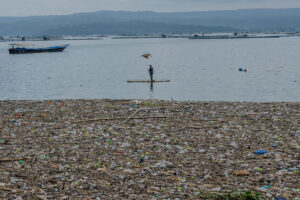
The program also aims to improve the plastic and solid waste management value chain to ensure long-term ecological and economic resilience in the Philippines.
“More than half of the Philippine population is dependent on the country’s oceans and rich marine biodiversity for food and livelihoods, with the blue economy having great potential to be central to attaining inclusive, resilient, and low-carbon development,” ADB Country Director for the Philippines Andrew Jeffries said.
“This is ADB’s first extensive cross-sector program focused on fostering national blue economy development in the region. We are committed to assisting our host country in achieving its climate resilience and low-carbon objectives,” he added.
In addition, Agence Française de Développement and Germany’s KfW Development Bank are set to provide cofinancing of up to €200 million (about P13.82 billion) each for Subprogram 1.
Last year, key blue economy sectors generated P1.01 trillion ($17.17 billion) to the country’s economy, accounting for 3.8% of gross domestic product.
The blue economy includes fisheries, manufacturing of ocean-based products, tourism-related services, shipping, and offshore energy.
However, marine ecosystems in the Philippines are being affected by plastic and solid waste pollution, as well as extreme weather.
The Philippines, the world’s second-largest archipelagic nation, is battered by around 20 typhoons each year, with cyclones growing stronger in recent years.
The Marine Ecosystems for Blue Economy Development Program is aligned with the Philippine Development Plan 2023-2028 and supports the implementation of the National Adaptation Plan (NAP) 2023-2050.
The NAP is a joint initiative of the Climate Change Commission and the Department of Environment and Natural Resources to craft fit‑for‑purpose, science‑based adaptation strategies for sectors already facing and expected to face the impacts of climate change.
The program leverages ADB’s backing for climate action under the Climate Change Action Program, the bank’s first climate policy‑based loan in the region.
The loan complements the Philippines Flyway Project, which focuses on conserving and managing three priority wetlands, such as Candaba in Luzon, and Lake Mainit and Sibugay wetlands in Mindanao. This aims to bolster biodiversity, expand sustainable livelihoods, and improve climate resilience.
Earlier this year, ABD expressed its support for the proposed Blue Economy Act to improve marine-based livelihoods and ensure the long-term sustainability of the ocean economy.
The Senate passed Senate Bill No. 2450 in August last year, while the House approved its counterpart in December 2023. However, lawmakers failed to ratify a reconciled measure before the end of the 19th Congress.
Senators Lorna Regina “Loren” B. Legarda and Senator Risa N. Hontiveros-Baraquel have refiled the measure since the 20th Congress opened.
President Ferdinand R. Marcos, Jr. will support renewed efforts to pass the Blue Economy Act, Palace Press Officer Clarissa A. Castro said in July.
The ADB was the second-biggest development partner of the Philippines in 2024 with 59 loans and grants worth $11.05 billion. — Aubrey Rose A. Inosante