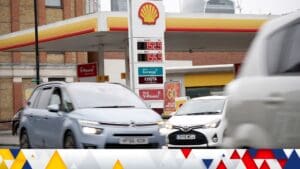
Sir Gerald Ronson’s forecourt empire has delivered a record profit, with the property tycoon’s service station business now valued at more than £1.5bn.
GMR Capital, the parent of petrol forecourt operator Rontec, reported pre-tax profits of £98.4m for the 12 months to the end of September, up 6 per cent on the previous year and surpassing its earlier peak of £95.7m in 2022.
The record came despite revenues slipping 7.7 per cent to £1.56bn, reflecting what the company described as a “challenging economic environment” and cautious consumer spending.
Rontec, which operates 267 service stations across the UK, said rising costs, higher employer national insurance contributions and living wage obligations had squeezed margins. However, lower interest repayments, as borrowing costs eased over the year, helped boost profitability.
The group described the period as “another successful year”, extending a long track record of resilience. GMR has recorded losses only three times in the past three decades, with its most recent annual loss dating back to 2009.
In 2025, property agent Colliers revalued Rontec’s real estate estate at £1.51bn, an increase of £318m. The uplift was attributed partly to investment in site improvements and partly to broader commercial property gains as interest rates fell.
Rontec has been investing heavily in modernising its estate. The company is midway through refurbishing its Shop’N Drive convenience stores and has upgraded its Subway franchises. Its food-to-go offer continues to expand, including 43 franchised outlets of Greggs.
The group has also earmarked tens of millions of pounds for ultra-fast electric vehicle charging hubs. Six forecourts currently host the chargers, with another six planned, although rollout has been slowed by delays in securing high-capacity grid connections and uncertainty in the EV market.
Ronson, 86, who introduced self-service petrol stations to the UK in the 1960s, has previously described Rontec as his “f*** you” business because of its ability to generate cash through economic cycles.
Better known publicly for landmark developments such as the 46-storey Heron Tower in the City of London, Ronson also served six months in prison in the 1990s for his role in the Guinness share-trading scandal.
He remains chairman of GMR, with his wife Gail and daughters Nicole and Lisa also serving on the board.
Company accounts show Ronson spent £164,000 chartering the company jet during the year, along with £82,000 on use of a company-owned yacht. The yacht was subsequently sold for £2m to a company owned by his wife.
Despite headwinds in consumer spending and higher operating costs, Ronson’s forecourt empire has once again demonstrated its ability to generate record returns — reinforcing its reputation as one of Britain’s most resilient private business empires.